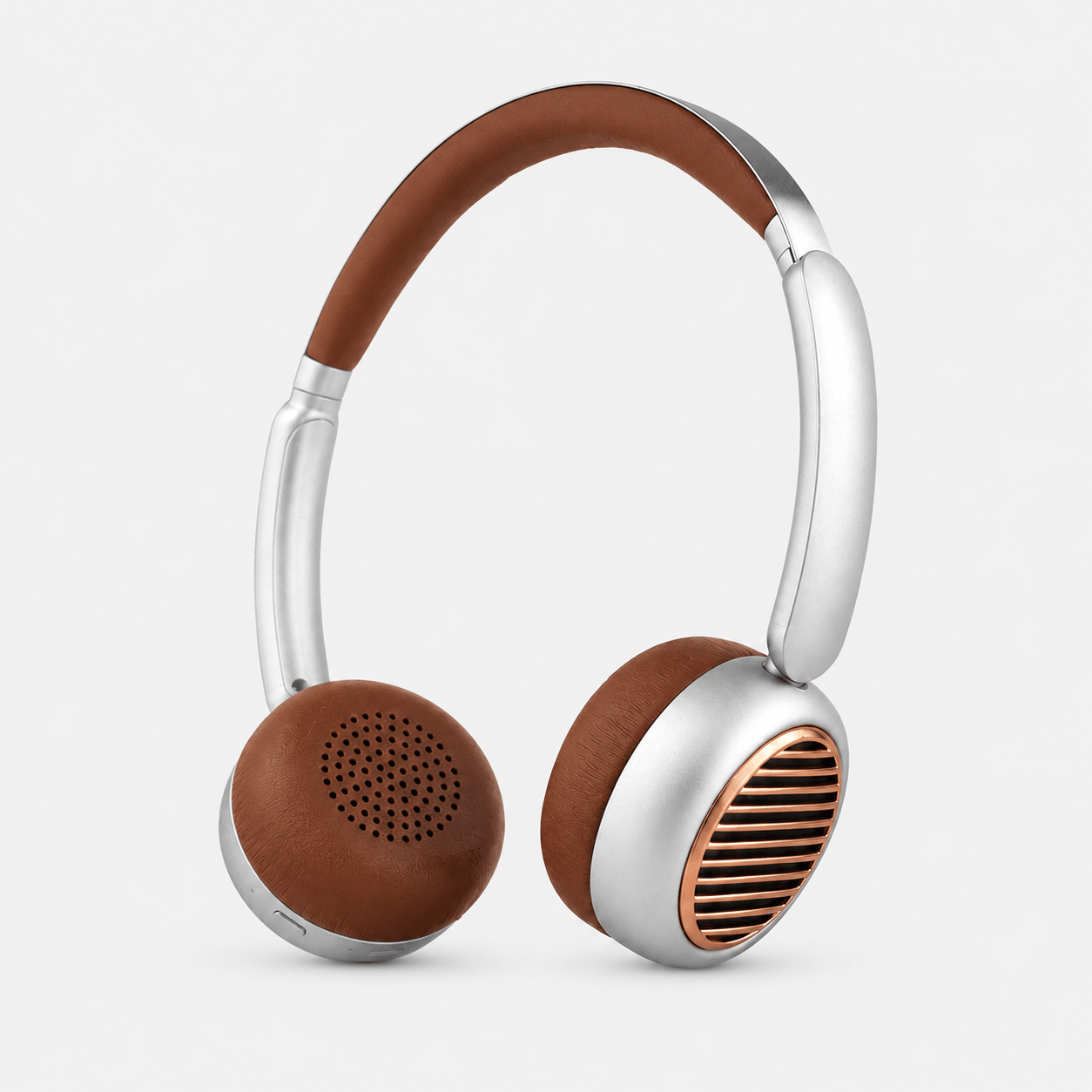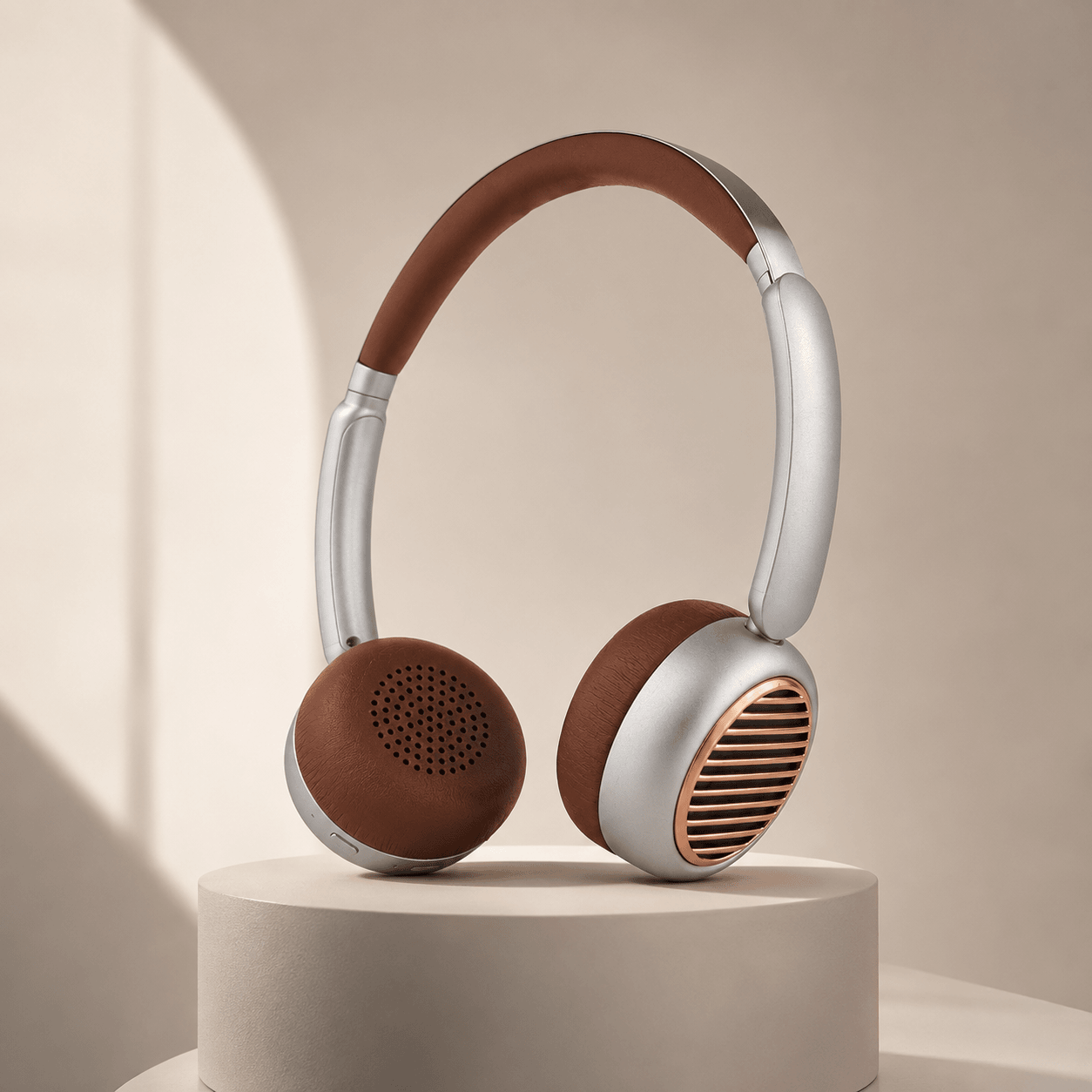
As basic wireless connectivity matures, industrial design plays a larger role in differentiation. Warm, low-saturation brown tones stand apart from the usual black-and-white technology look. Deep brown, tan, and metallic details can evoke classic cameras, leather goods, or vintage audio equipment, turning headphones into an everyday fashion accessory. For brands targeting creative, commuter, or smart-casual audiences, this style can create a stronger product identity.
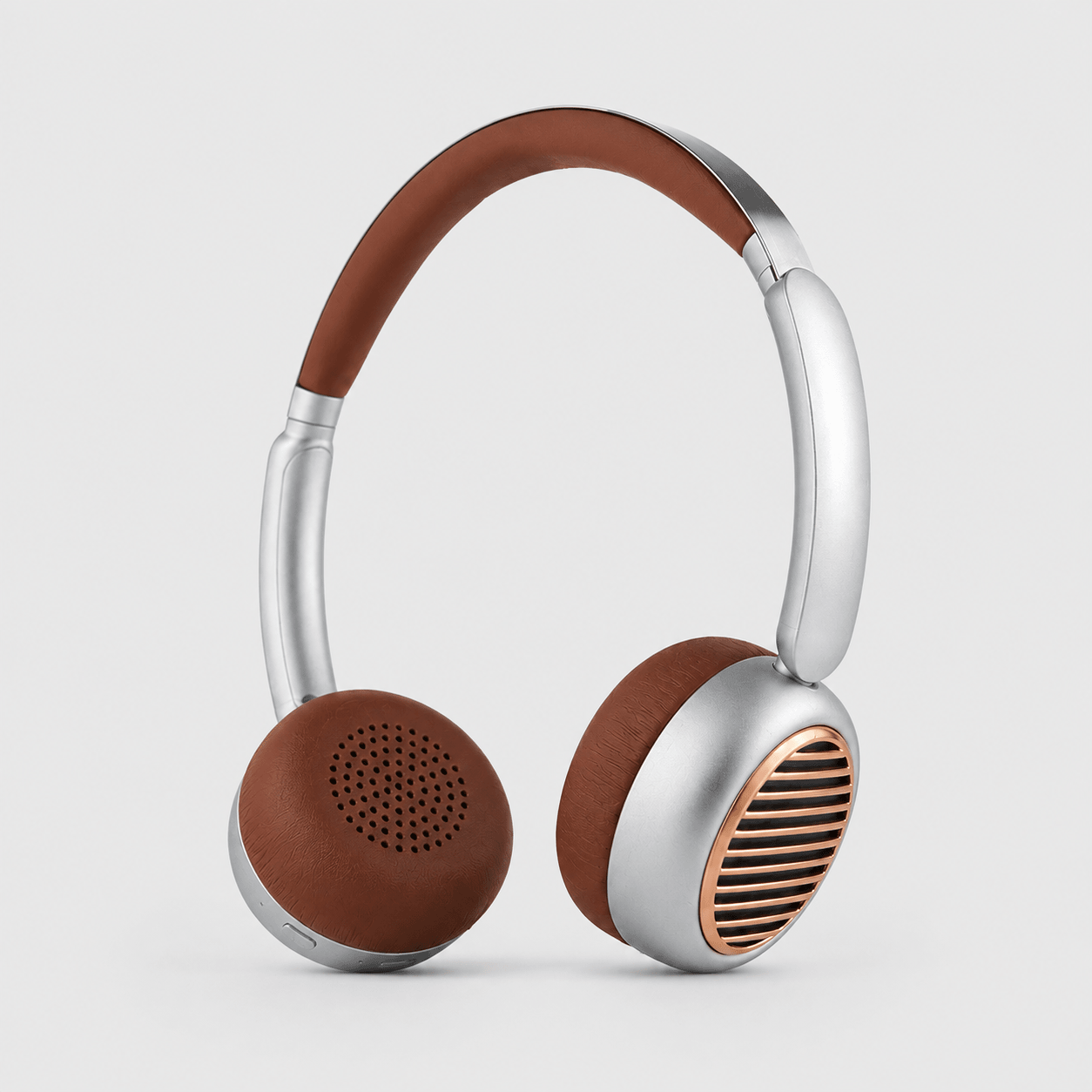
An on-ear structure gives this product a visually light profile. Compared with over-ear headphones, it uses smaller cups and is easier to carry around the neck or in a bag. Design must still consider headband adjustment, cushion feel, clamping force, and heat during long wear, because compact size does not guarantee comfort. Materials, leather-like textures, and knob or button feel should remain consistent so the retro language extends beyond color into actual use.
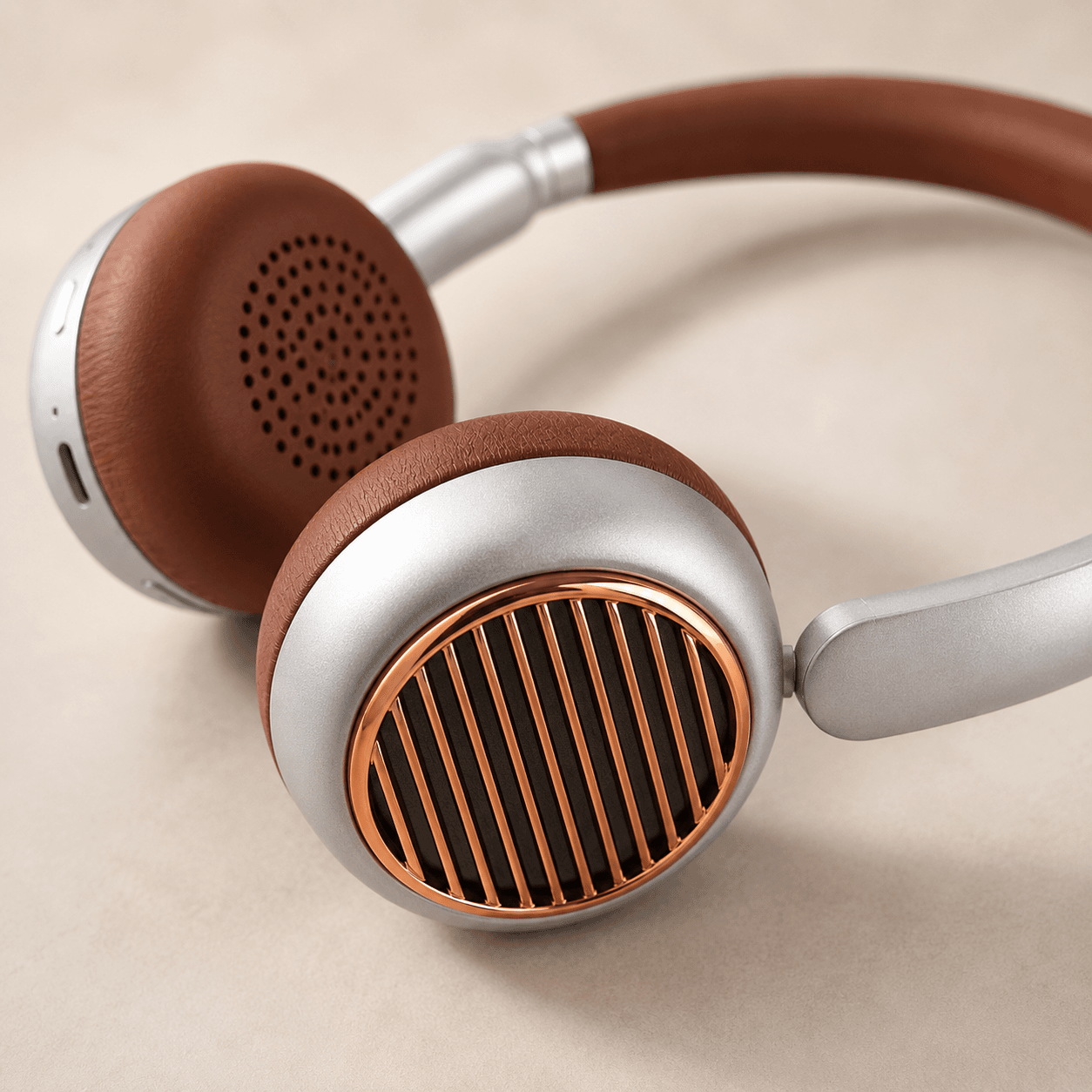
Modern Bluetooth gives a retro design a practical core. Users can listen and take calls without cables while reading in a café, walking, commuting, or working on the move. These products generally favor balanced, comfortable long-term listening over an exaggerated sound. Connection stability, microphone pickup, button behavior, battery life, and device compatibility still require testing so that function matches the visual design.

Retro headphones connect consumer electronics with lifestyle design. They work well in imagery featuring linen, denim, minimalist tailoring, or travel and are also suitable for gifts, collaborations, and themed packaging. Customization can coordinate the headband texture, metal finish, logo placement, storage accessories, and packaging materials. Styling cannot replace product reliability, however; the retro-brown design creates lasting value only when fit, sound, call quality, and connectivity meet the target standard.